Most guides to the Sahara focus on Marrakech or Fes as the starting point, but a growing number of travellers begin their desert journey in Agadir, drawn by its direct international flights and Atlantic beaches. The route south and east into the Sahara is longer than from Marrakech, but it passes through landscapes very few Merzouga-bound travellers ever see. Here is how to plan it.
The drive from Agadir to Merzouga covers roughly 650 kilometres each way, noticeably further than the Marrakech route, and passes through an entirely different corridor: the Souss Valley, the Anti-Atlas mountains, and the saffron country around Taliouine, before joining the more familiar road through Ouarzazate. Most tours split this into two driving days each way, with an overnight stop breaking up the journey.
Leaving Agadir, the road first passes through the Souss Valley, lined with argan trees, the source of Morocco's famous oil, before reaching Taroudant, often called "the little Marrakesh" for its own red ramparts and walled medina, without the crowds. From there, the route climbs into the Anti-Atlas mountains via Taliouine and Taznakht, a quieter and less-travelled range than the High Atlas further north.
Taliouine sits at the heart of Morocco's saffron-growing region, producing some of the finest saffron in the world in small terraced fields at altitude. A short stop here, particularly during the October harvest, offers a genuine glimpse of a Berber agricultural tradition that most desert-bound travellers on the Marrakech route never encounter. Taznakht, further along, is known instead for its distinctive geometric Berber rug weaving.
Beyond the Anti-Atlas, the route joins the road through Ouarzazate, Morocco's film production hub and the "Gateway to the Desert," where most Agadir-based itineraries stop for the first night. From here, the journey continues on the same corridor used by Marrakech-based tours, including the option to stop at the UNESCO-listed kasbah of Aït Benhaddou if your route allows a short detour.
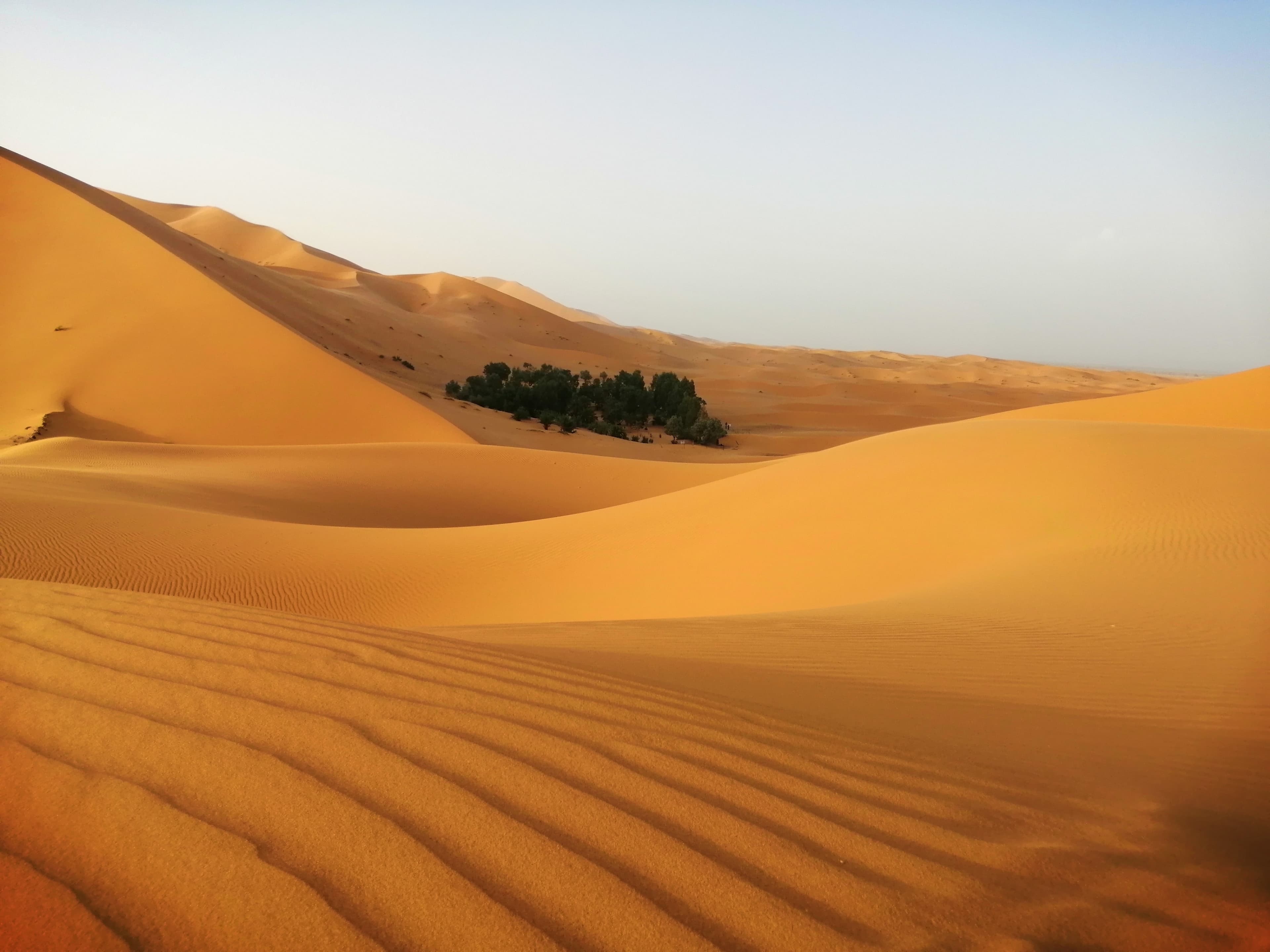
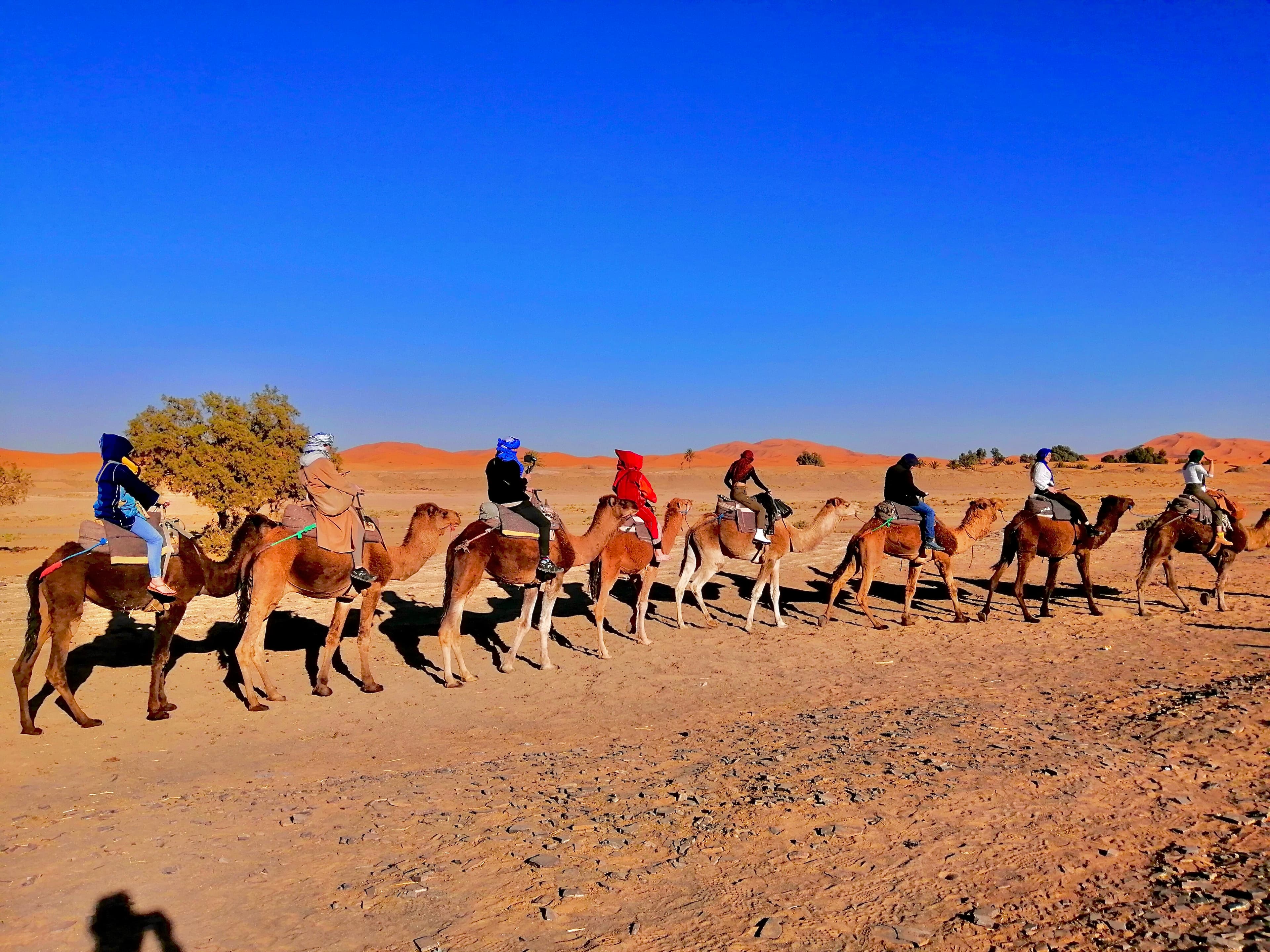
From Ouarzazate, the road continues through the Dades and Draa valleys toward Erg Chebbi, following the same dramatic corridor described for the Marrakech route: kasbahs, palm oases, and finally the flat hammada giving way abruptly to the dunes. Most Agadir itineraries reach Merzouga on the second or third day, timed to arrive for a sunset camel trek into camp.
Because of the extra distance, a comfortable Agadir-to-Merzouga round trip needs a minimum of 4 days, with 5 days recommended for a more relaxed pace that includes proper time in Taroudant and the Anti-Atlas rather than treating them purely as driving stops. A rushed 3-day version exists but sacrifices most of what makes the Agadir route distinctive in the first place.
The clearest advantage of starting in Agadir is the combination itself: several days on the Atlantic coast, surfing, seafood, and the relaxed pace of a beach town, bookended by a genuine Sahara expedition, all without needing an internal flight or a long transfer to Marrakech first. For travellers flying directly into Agadir, this is often the most efficient way to see both faces of southern Morocco on a single trip.
Helpful Resources
Ready to Experience the Sahara?
Turn what you've just read into a real memory. Our Berber-led tours bring every story in this blog to life.
Mustapha Oufota
Berber desert guide and founder of Sahara Desert Travel, born and raised in the Draa Valley