Female travellers ask us about clothing more than almost any other topic, and rightly so: dressing well for the Sahara means balancing cultural respect, sun and wind protection, and dramatic temperature swings, all at once. Here is a practical guide built from years of guiding women into the desert.
The desert region is more culturally conservative than Marrakech or the beach towns of the coast. Dressing modestly, covering shoulders, chest, and knees, is not about compliance with a rule, it is a sign of respect toward the Berber communities whose home you are visiting, and it consistently improves the warmth and openness of the welcome you receive. Morocco does not legally require women to cover their heads or wear specific clothing, but conservative dress is genuinely appreciated in rural areas.
Loose-fitting trousers or a long skirt paired with a lightweight, long-sleeved top is the most reliable combination: it satisfies modesty norms, protects against sun and wind, and is significantly cooler in desert heat than bare skin exposed to direct sun. Linen, cotton, and technical travel fabrics all work well. Avoid tight leggings or short skirts for the desert portion of your trip, even if they are fine elsewhere in Morocco.
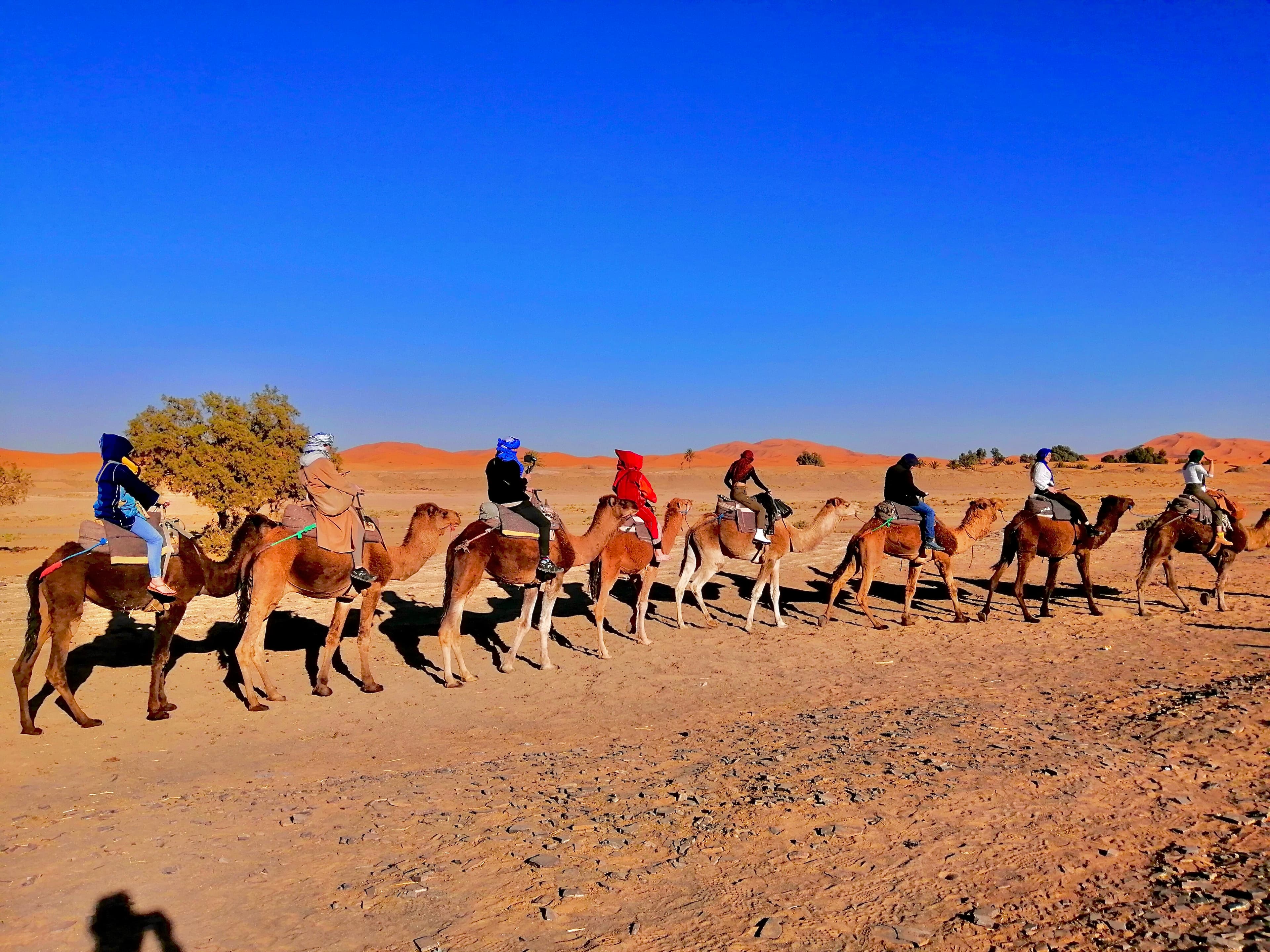
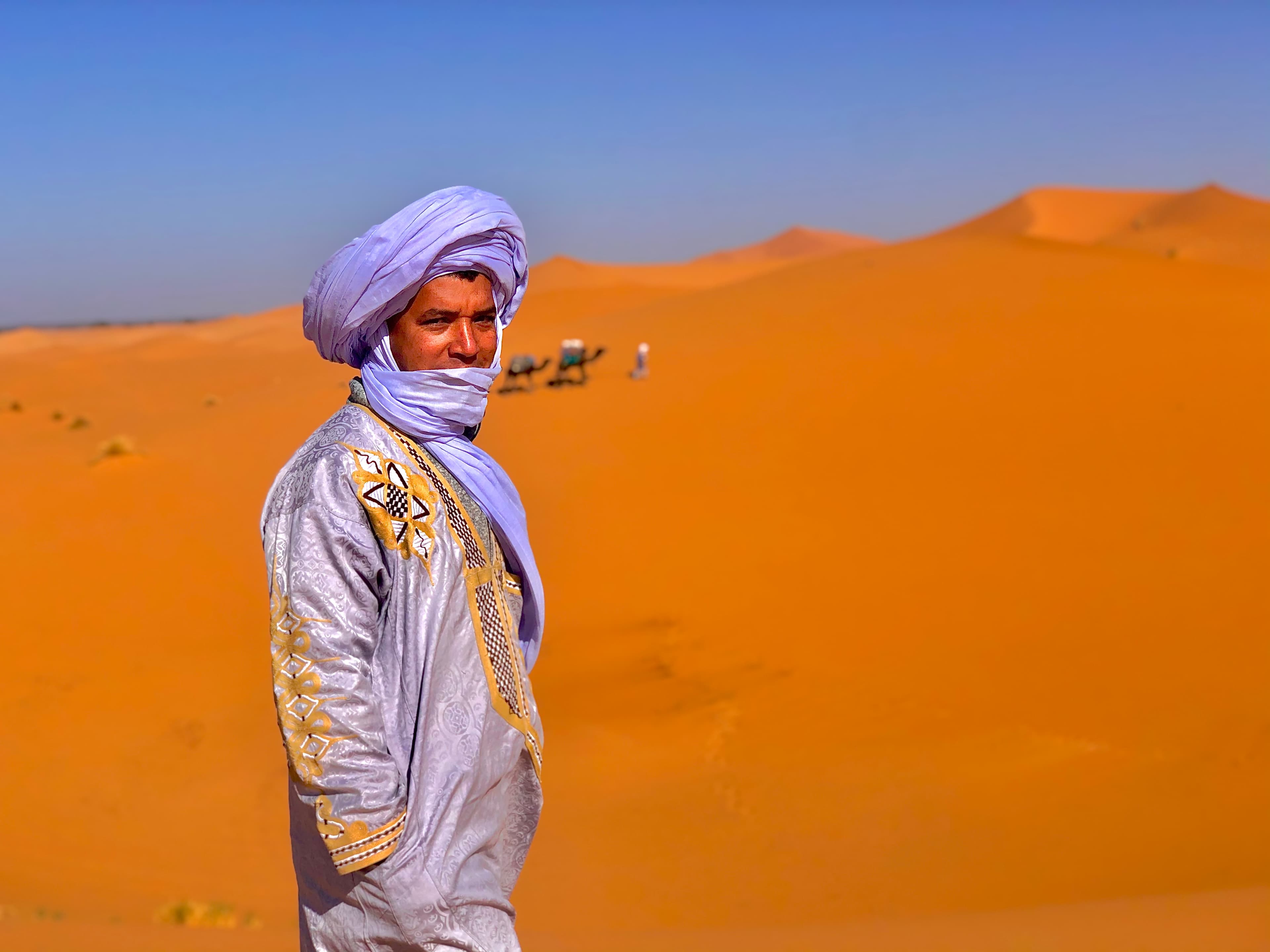
A large, lightweight scarf is the single most useful item a woman can pack for the Sahara. It doubles as sun protection over your shoulders or head during the heat of the day, wraps around your face and neck to block blowing sand on a camel trek or dune walk, and becomes a warm layer around your shoulders when the temperature drops sharply after sunset. Pack one specifically for this purpose, separate from any scarves you bring for city sightseeing.
Comfortable, closed-toe trainers or light hiking shoes are far more practical than sandals once you are on the sand: dune walking and camel mounting both throw sand everywhere, and closed shoes keep it out of contact with your skin far better than open footwear. Save sandals for the riad or hotel evenings before and after your desert night.
Desert temperature swings surprise almost every first-time visitor. Even in warmer months, nights at the dunes can drop 20°C or more from the daytime high. Bring a fleece or light down layer regardless of season, and in winter (November to February) pack a proper warm jacket. Thermal leggings under trousers are a smart addition for anyone planning to sit outside stargazing after dinner.
Leave behind delicate fabrics that sand and dust will damage, jewellery beyond what you are comfortable losing in a duffel bag, and anything requiring ironing or special care. A well-packed daypack of five or six versatile items will serve you better than a full suitcase of options you never end up wearing in the desert.
Dressing thoughtfully for the desert is about comfort and respect, not fear. Women travel the Sahara safely and confidently every single week, solo, in pairs, and in groups. The right clothing simply lets you focus entirely on the experience, the ride, the camp, the stars, rather than managing sun, sand, or self-consciousness.
Helpful Resources
Ready to Experience the Sahara?
Turn what you've just read into a real memory. Our Berber-led tours bring every story in this blog to life.
Mustapha Oufota
Berber desert guide and founder of Sahara Desert Travel, born and raised in the Draa Valley